@Ivica
1 year ago
· PC Part Reviews
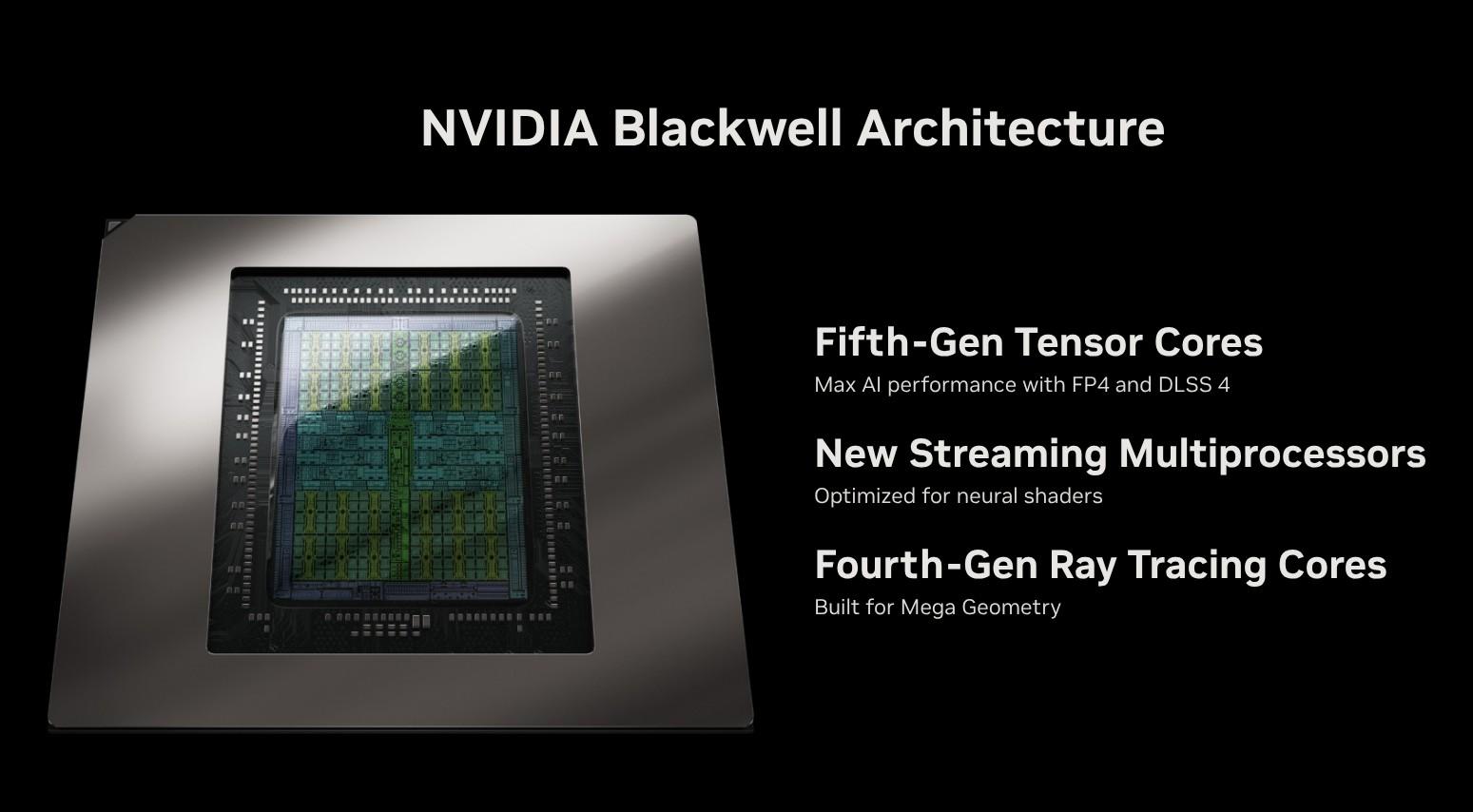
The RTX 5050 is positioned as the most budget-friendly option in NVIDIA’s new Blackwell generation, priced at $250 MSRP. It introduces the GB207 GPU, a compact chip (<150 mm²), delivering 2560 CUDA cores, 32 ROPs, and a 128-bit memory bus. However, unlike its siblings using GDDR7, the RTX 5050 relies on 8 GB of GDDR6, resulting in 320 GB/s bandwidth, significantly less than higher-tier models.
Despite its entry-level status, it brings Blackwell’s architectural improvements: unified INT32/FP32 shader execution, enhanced Tensor Core integration via DirectX APIs, and support for low-precision compute types (FP4/INT4), although real-world gains from these are limited at this tier.
Fabrication & Architecture
- Built on the TSMC 4N process (actually closer to 5 nm).
- Maintains a PCIe 5.0 x8 interface—sufficient for Gen 4/5 platforms, but may bottleneck slightly on PCIe 3.0 systems.
Performance
- At 1080p, it trails the RTX 4060 slightly, but delivers a 56% uplift over the RTX 3050.
- Competes closely with AMD’s RX 7600 and Intel’s Arc B580.
- Performance gap to RTX 5060 is ~30%, and to 5060 Ti ~50%—placing the 5050 clearly in the lower tier.
- 1440p is feasible in older titles, but 4K is impractical due to bandwidth and memory limitations.
Ray Tracing & VRAM Limitations
- Ray tracing is supported, but 8 GB VRAM proves limiting in newer games—some may crash at high textures (e.g., Indiana Jones).
- Better to disable RT and focus on DLSS upscaling for smoother experience.
- Neural Rendering (Cooperative Vectors) is introduced but lacks game support currently.
- DLSS Transformer upscaling (new with Blackwell) is a major strength—offering near-native image quality with smart performance tradeoffs.
- DLSS Frame Generation can help in slow-paced games, but may introduce noticeable latency in fast-paced titles.
Power, Thermals & Build
- TDP is ~130 W, suitable for weaker PSUs.
- Thermal performance is excellent, and noise levels are extremely low (~25 dBA).
- The compact cooler fits most cases; however, thermal putty use instead of pads may complicate disassembly.
Overclocking
- Offers +12% real-world gains through manual OC—strong for an entry-level card.
- GDDR6 allows higher memory OC headroom than GDDR7 cards.
Value & Competition
- While competitively priced at $250, price/performance ratio lags behind alternatives like the RTX 5060 and RX 9060 XT.
- For users prioritizing DLSS quality and ecosystem support, the 5050 is viable.
- For higher VRAM needs or stronger RT performance, AMD’s offerings and Intel’s Arc B580 present compelling alternatives.
Comments
0 comments on this article.
Log in to leave a comment.
Log inNo comments yet.