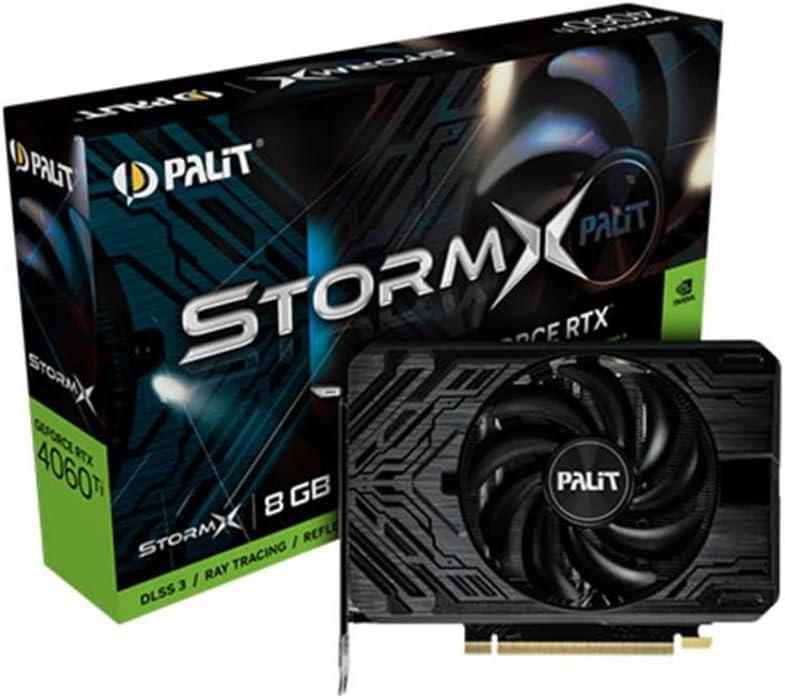
RTX 4060 Ti 8GB
RTX 4060 Ti 8GB Review & Specifications
The RTX 4060 Ti 8GB is based on the Ada Lovelace architecture and manufactured using the 5 nm nm process node. It was launched approximately 3 years, 1 month ago, originally priced at $399. It features 4352 cores, including 46 compute units (SMs), 136 texture mapping units (TMUs), and 48 render output units (ROPs). For ray tracing and AI-accelerated tasks, it also includes 34 dedicated RT cores and 136 Tensor cores, enabling advanced rendering and upscaling features where supported. It has a base clock of 2310 MHz and a boost clock reaching up to 2535 MHz. The RTX 4060 Ti 8GB comes equipped with 8 GB of GDDR6 memory across a 128-bit bus. Memory runs at 2250 MHz and delivers a total memory bandwidth of 288 GB/s.
This GPU has a low thermal design power (TDP) of 160 W. It is generally compatible with almost all PC cases and is excellent for SFF and compact systems where heat dissipation is a concern.
RTX 4060 Ti 8GB Performance
RTX 4060 Ti 8GB is an entry-level graphics card with a relative gaming performance score of 39.08%. It performs well at 1080p and can handle 1440p with optimized settings or features like DLSS and FSR, though it's not suitable for 4K. Intended for for casual gamers or users who play occasionally on general-purpose PCs.
The RTX 4060 Ti 8GB pairs a relatively powerful GPU core with a moderate VRAM size of 8 GB — a configuration that's becoming increasingly common. However, this pairing has sparked significant discussion in the gaming and tech review communities. Many modern GPUs with strong processing capabilities are equipped with insufficient VRAM (often less than 16 GB), which prevents them from realizing their full potential. As a result, GPUs like this one often deliver excellent performance in 1080p gaming at ultra settings, and perform well at 1440p in many titles. However, as modern games demand more VRAM — particularly due to high-resolution textures, ray tracing, and expansive open worlds — this limited memory becomes a bottleneck. In 4K gaming, performance can drop significantly due to VRAM exhaustion, leading to underutilization of the GPU core itself. Technologies like DLSS can mitigate some of the performance loss at higher resolutions, although this may come at the cost of visual fidelity. Content creators will find it suitable for HD and QHD editing, small-scale 3D work, and digital painting. Importantly, NVIDIA’s support for CUDA, cuDNN, and TensorRT gives this GPU a distinct edge in AI and ML workloads. It can handle inference, fine-tuning, and training of small to intermediate models with good efficiency, provided batch sizes and precision are tuned for memory constraints. An ideal starting point for AI learners and developers.
In terms of gaming value, RTX 4060 Ti 8GB provides excellent performance per dollar, reaching 82.6% efficiency relative to the best in this category. It performs well in 1080p and 1440p, but due to the limited VRAM, it may struggle with future games or long-term use.
General Information
| GPU Name | RTX 4060 Ti 8GB |
|---|---|
| GPU Code Name | AD106 |
| Release Price | $399 |
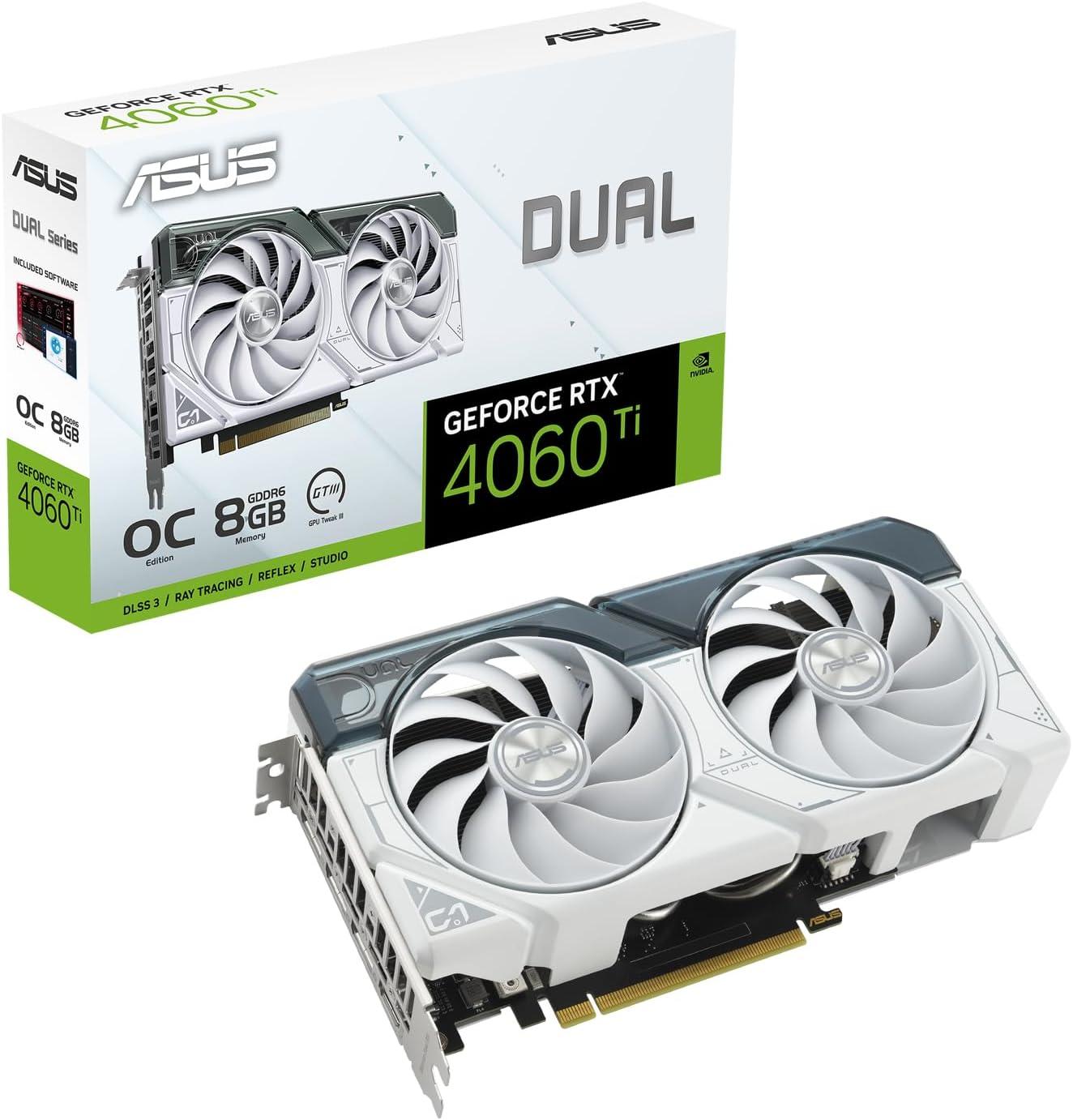
| Selected Model | ASUS Dual GeForce RTX 4060 Ti V2 OC Edition 8GB GDDR6 SFF Compatible with Axial-tech Fan/DUAL-RTX4060TI-O8G-V2 (Renewed) |
| Current Price Amazon | $345 |
| Amazon Price Updated | 7 hours, 48 minutes ago |
| Launch Date | 3 years, 1 month ago |
| GPU Available | True |
| Architecture | Ada Lovelace |
|---|---|
| Foundry | TSMC |
| Process | 5 nm |
| Transistors | 22900 million |
| Die Size | 188 mm² |
| Bus Interface | PCIe 4.0 x8 |
| TDP | 160 W |
| Cores | 4352 |
|---|---|
| CUs (SMs) | 46 |
| TMUs | 136 |
| ROPs | 48 |
| RT Cores | 34 |
| Tensor Cores | 136 |
| L1 Cache | 128 KB (per SM) |
| L2 Cache | 32 MB |
| Base Clock | 2310 MHz |
|---|---|
| Boost Clock | 2535 MHz |
| Memory Size - Type | 8 GB GDDR6 |
|---|---|
| Memory Bus Width | 128 bit |
| Memory Clock | 2250 MHz |
| Memory Bandwidth | 288 GB/s |
| DirectX | 12 Ultimate (12_2) |
|---|---|
| OpenGL | 4.6 |
| OpenCL | 3.0 |
| Vulkan | 1.4 |
| Shader Model | 6.8 |
Theoretical Performance
| Pixel Rate | 109.40 GPixel/s |
|---|---|
| Texture Rate | 344.80 GTexel/s |
| FP16 | 22.06 TFLOPS |
| FP32 | 22.06 TFLOPS |
| FP64 | 344.82 GFLOPS |
Gaming Performance Chart
RTX 4060 Ti 8GB Compared to Similar Performance GPUs
GPU Price / Performance Table
| GPU (Desc) | Price (Desc) | Gaming_1080p (Desc) | Gaming_1440p (Desc) | Gaming_2160p (Desc) | Game_1440p/Price (Desc) |
|---|---|---|---|---|---|
|
$335
|
↑
1.5%
|
40.3%
|
33.8%
|
28.5%
|
90.7%
|
|
|
$350❗
|
0.0%
|
40.9%
|
33.2%
|
25.5%
|
85.2%
|
|
|
$370
|
↓
-14.0%
|
38.8%
|
32.8%
|
28.7%
|
79.7%
|
|
|
$675❗
|
0.0%
|
39.1%
|
32.6%
|
26.5%
|
43.4%
|
|
|
$557❗
|
↑
0.9%
|
38.5%
|
31.7%
|
25.7%
|
51.2%
|
|
|
$345
|
0.0%
|
39.1%
|
31.7%
|
24.3%
|
82.6%
|
|
|
$350
|
0.0%
|
38.8%
|
31.0%
|
24.0%
|
79.6%
|
|
|
$400
|
0.0%
|
36.8%
|
30.2%
|
24.6%
|
68.0%
|
|
|
$320❗
|
↑
3.2%
|
32.6%
|
29.5%
|
25.0%
|
82.9%
|
GPU Specification Table
| GPU (Desc) | Architecture | Shader/TMU/ROP/RT | Base/Boost Clock | Memory | Mem Clock/Bandwidth | TDP |
|---|---|---|---|---|---|---|
| RTX 3070 | GA104 / 8 nm nm / Ampere | 5888 / 184 / 96 / 46 | 1500 MHz / 1725 MHz | 8 GB GDDR6 / 256 bit | 1750 MHz / 448 GB/s | 220 W |
| RX 9060 XT 8GB | Navi 44 / 4 nm nm / RDNA 4.0 | 2048 / 128 / 64 / 32 | 1700 MHz / 3130 MHz | 8 GB GDDR6 / 128 bit | 2518 MHz / 322 GB/s | 150 W |
| RTX 2080 Ti | TU102 / 12 nm nm / Turing | 4352 / 272 / 88 / 68 | 1350 MHz / 1545 MHz | 11 GB GDDR6 / 352 bit | 1750 MHz / 616 GB/s | 250 W |
| RTX 4060 Ti 16GB | AD106 / 5 nm nm / Ada Lovelace | 4352 / 136 / 48 / 34 | 2310 MHz / 2535 MHz | 16 GB GDDR6 / 128 bit | 2250 MHz / 288 GB/s | 165 W |
| RX 6750 XT | Navi 22 / 7 nm / RDNA 2.0 | 2560 / 160 / 64 / 40 | 2150 MHz / 2600 MHz | 12 GB GDDR6 / 192 bit | 2250 MHz / 432 GB/s | 250 W |
| RTX 4060 Ti 8GB | AD106 / 5 nm nm / Ada Lovelace | 4352 / 136 / 48 / 34 | 2310 MHz / 2535 MHz | 8 GB GDDR6 / 128 bit | 2250 MHz / 288 GB/s | 160 W |
| RTX 5060 | GB206 / 5 nm nm / Blackwell 2.0 | 3840 / 120 / 48 / 30 | 2280 MHz / 2497 MHz | 8 GB GDDR7 / 128 bit | 1750 MHz / 448 GB/s | 145 W |
| RX 6700 XT | Navi 22 / 7 nm nm / RDNA 2.0 | 2560 / 160 / 64 / 40 | 2321 MHz / 2581 MHz | 12 GB GDDR6 / 192 bit | 2000 MHz / 384 GB/s | 230 W |
| Arc B580 | BMG-G21 / 5 nm / Xe2 | 2560 / 160 / 80 / 20 | 2670 MHz / 2670 MHz | 12 GB GDDR6 / 192 bit | 2375 MHz / 456 GB/s | 190 W |
Graphics Cards Based on the RTX 4060 Ti 8GB GPU
| Specification | Perf Chart | ||||
|---|---|---|---|---|---|
| Price |
$1111❗
|
0.0%
|
$619❗
|
0.0%
|
$700
|
↓
-12.0%
|
$540
|
0.0%
|
$340
|
↓
-2.9%
|
| GPU | Nvidia RTX 4060 Ti 8GB | Nvidia RTX 4060 Ti 8GB | Nvidia RTX 4060 Ti 8GB | Nvidia RTX 4060 Ti 8GB | Nvidia RTX 4060 Ti 8GB |
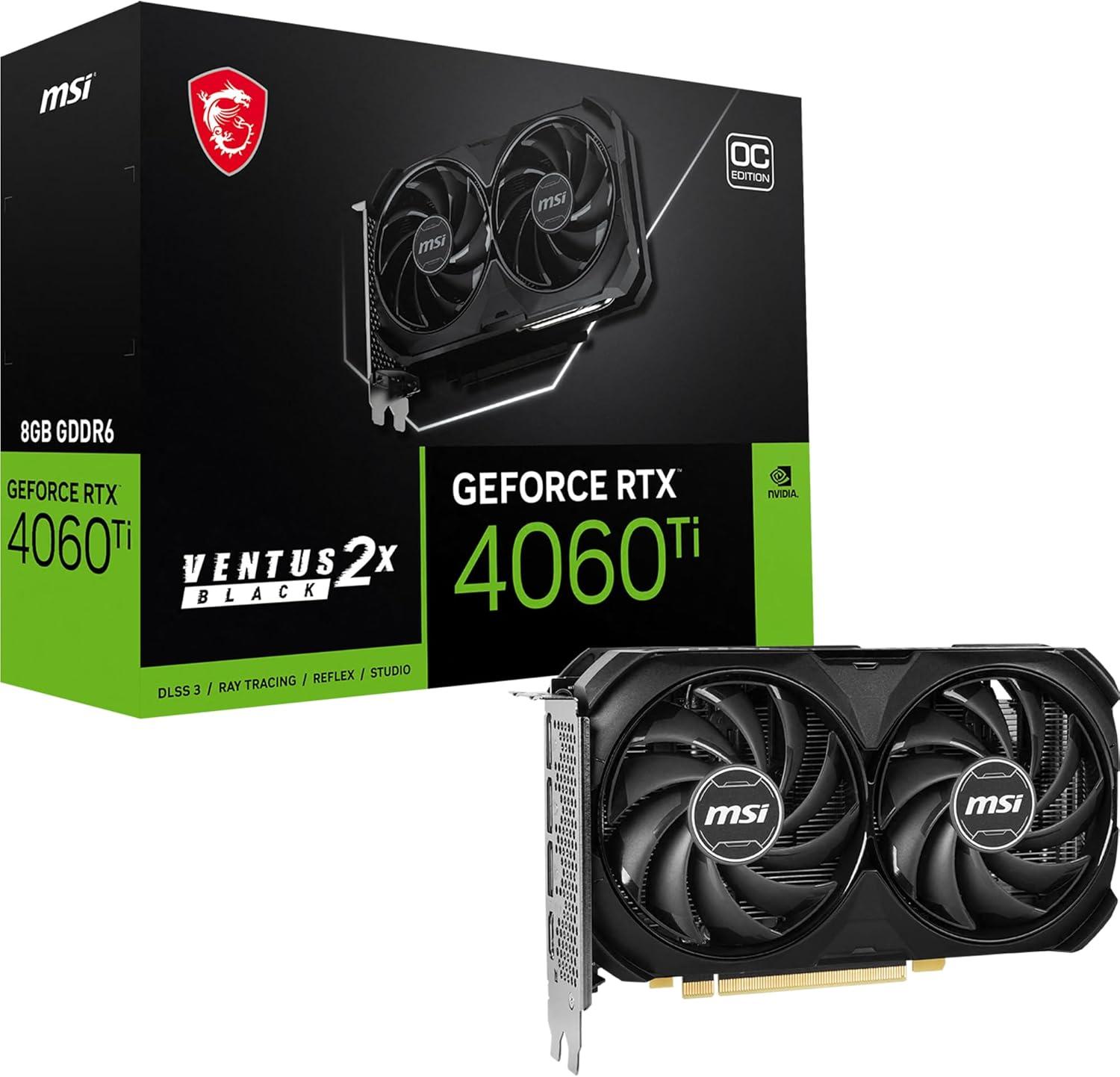
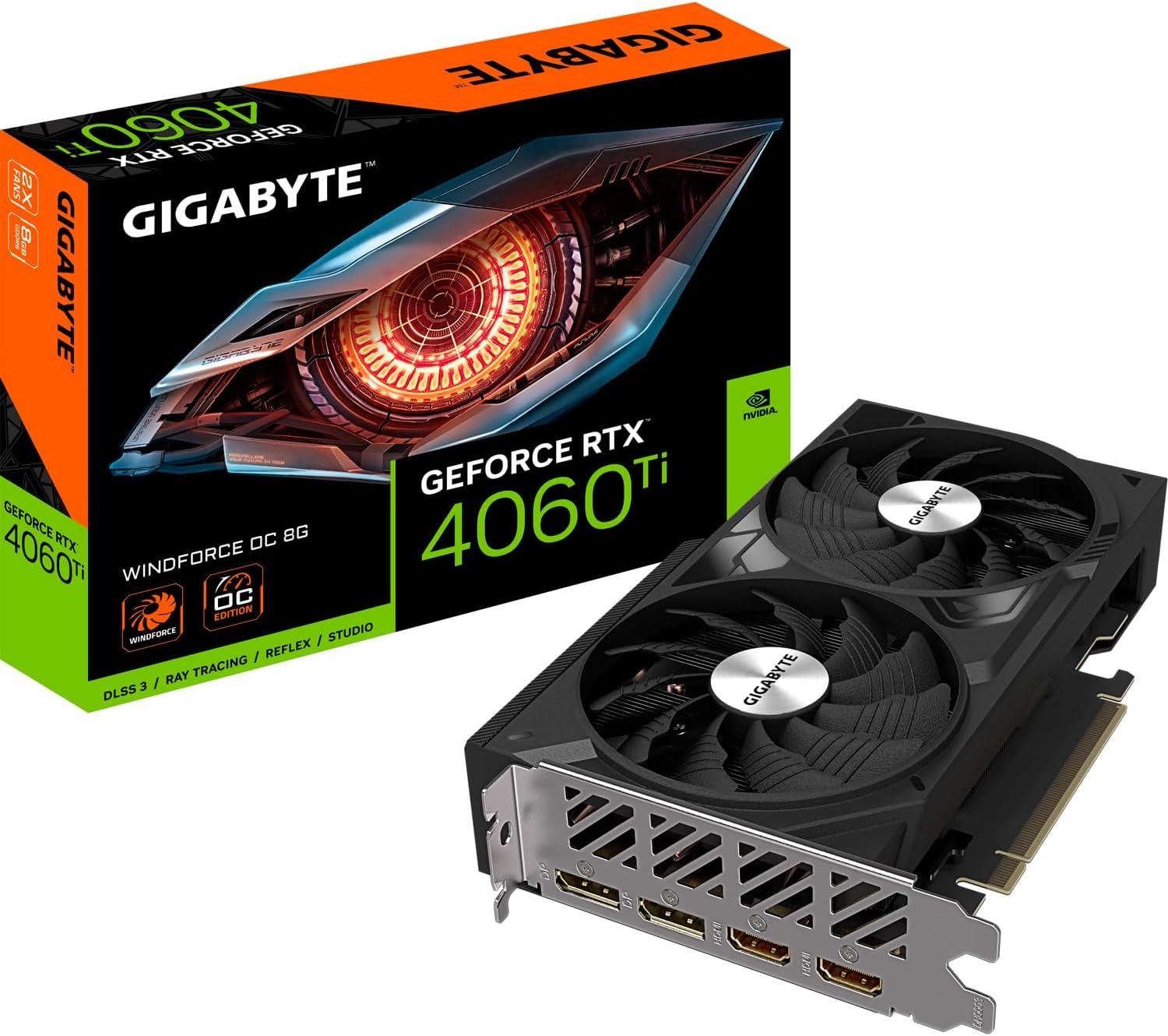
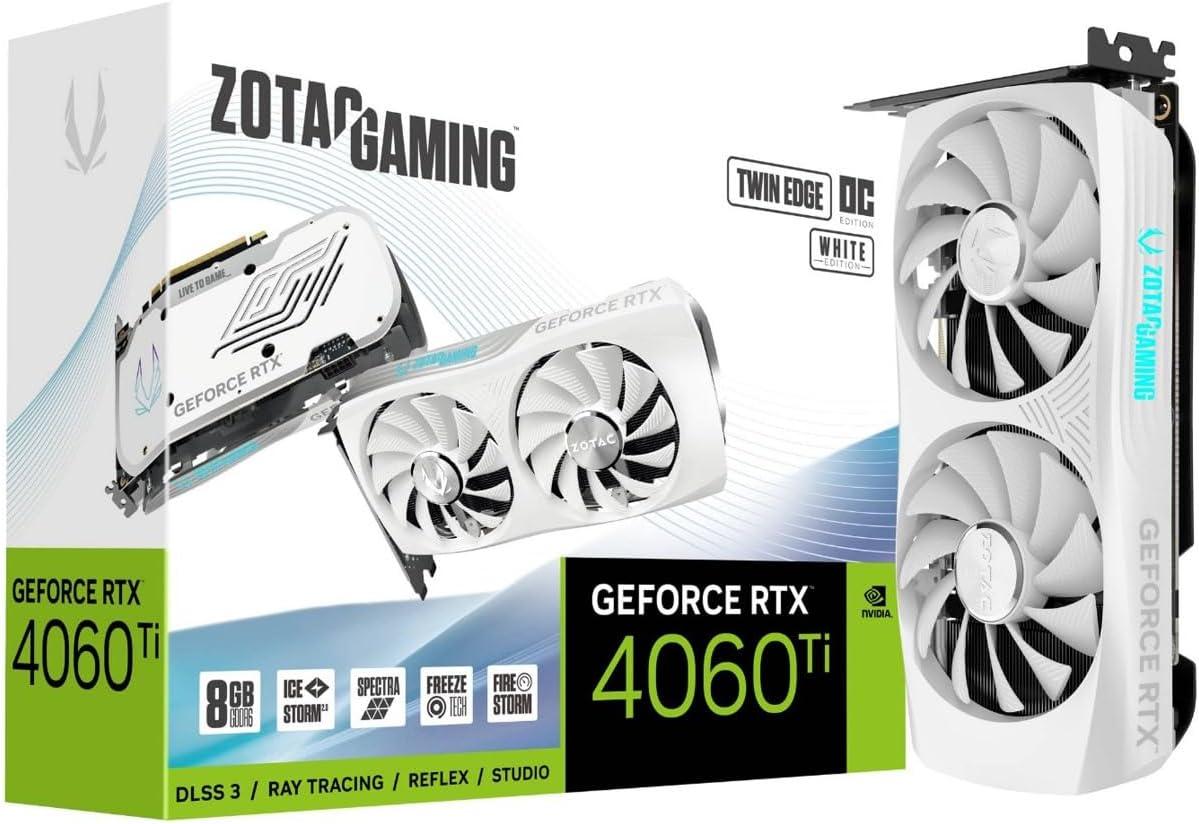
| Manufacturer | Palit | ASUS | MSI | ZOTAC | Gigabyte |
| Chip/Process/Arch | AD106 / 5 nm nm / Ada Lovelace | AD106 / 5 nm nm / Ada Lovelace | AD106 / 5 nm nm / Ada Lovelace | AD106 / 5 nm nm / Ada Lovelace | AD106 / 5 nm nm / Ada Lovelace |
| Cores/TMU/ROP/RT | 4352 / 136 / 48 / 34 | 4352 / 136 / 48 / 34 | 4352 / 136 / 48 / 34 | 4352 / 136 / 48 / 34 | 4352 / 136 / 48 / 34 |
| Base/Boost MHz | 2310 MHz / 2535 MHz | 2310 MHz / 2535 MHz | 2310 MHz / 2535 MHz | 2310 MHz / 2535 MHz | 2310 MHz / 2535 MHz |
| Factory OC MHz | 2535 MHz | 2625 MHz | 2580 MHz | 2550 MHz | 2550 MHz |
| VRAM / Bus | 8 GB GDDR6 / 128 bit | 8 GB GDDR6 / 128 bit | 8 GB GDDR6 / 128 bit | 8 GB GDDR6 / 128 bit | 8 GB GDDR6 / 128 bit |
| Mem Clock/Band | 2250 MHz / 288 GB/s | 2250 MHz / 288 GB/s | 2250 MHz / 288 GB/s | 2250 MHz / 288 GB/s | 2250 MHz / 288 GB/s |
| TDP | 160 W | 160 W | 160 W | 160 W | 160 W |
| Power Connector | 1 x 8-pin PCIe | 1 x 8-pin PCIe | 1 x 8-pin PCIe | 1 x 8-pin PCIe | 1 x 8-pin PCIe |
| Dimensions | 169.9 x 124.1 x 38.8 mm | 227.2 x 123.24 x 49.6 mm | 199 x 120 x 42 mm | 225.5mm x 123.2mm x 40.1mm | L=201 W=120 H=41 mm |
Add Comment on RTX 4060 Ti 8GB